Thursday, September 3, 2026
Home Blog Page 27

The Differentiation between Initial Coin Offering (ICO) and Security Token Offering (STO) – Explained!

The ICO (Initial Coin Offering) is the primary, most often used and quickest approach to funding a blockchain venture without intermediaries in the year 2017 to 2018. The STO (Security Token offering) can be differentiated with the IPO (Initial public offering), where the tokens are taken as real securities. As of now, there is an intense discussion taking place inside the crypto network. This discussion is revolved around the rise of another strategy for fund-raising for blockchain projects, and this technique is known as STO (Security Token Offering).

ICO

An ICO is almost identical to an IPO in the traditional investment world. Moreover, ICOs themselves are a technique for raising support for funds where an organization looking to initiate new service or a product will search for outside investment to help subsidize their venture. The organization running the ICO will do this through different types of marketing. The organizations will utilize an ICO to eliminate strict regulatory guidelines which are costly and tedious, associated with ordinary fundraising strategies.

Advantages of ICOs

Some of the advantages of an ICO are:

  • For purchasers and vendors, there is no entry block
  • It has a Positive Impact on the network
  • The tokens are shared in a basic automated manner
  • The groups can deal with their assets any way they like
  • An effective ICO frequently requires only a professional digital campaign
  • When a price of the coin rises, investors enjoy high profits and early adopter benefits
  • Few ICOs permits anonymous participation

Disadvantages of ICOs

Some of the disadvantages of an ICO are:

  • High instability and control over the crypto market
  • Low liquid assets
  • Not sure if the product will be done and delivered as expressed in the white paper
  • Pump and dump plans and Scams are regular issues with investors and project holders
  • Risk related to space.

STO

Firstly, most ICOs (Initial coin offering) is intended for fundraising in an environment which is unregulated. Most ICOs place their offerings as utility tokens to bypass regulations. Most organizers and ventures dispute that they distribute client’s tokens to get to their decentralized applications (DApps) or local platforms. The primary reason here is that the purpose behind their coin is utilization and not trading. This line of thinking makes ICO ventures to evade regulation and registration with SEC or strict controllers.

STOs are supported continuously by some tangible resource, which keeps speculators from falling prey to fake business policies. STOs are classified as securities, and they are additionally subject to securities guidelines for the nation they are launched and for their investor’s nation.

Advantages of STOs

Some of the advantages of an STO are:

  • Financial specialists get hidden resources that get their value from others
  • Ensure security of investors which gives 100% regulated offerings
  • Ventures that go for STOs are commonly more developed and dependable than the ones in the ICO circle.
  • STOs are undergoing significant development while ICOs shrinks its space.
  • It is a progressing pattern.
  • Security tokens are predicted to be traded using intermediary vendors who are directed by regulatory bodies.
  • Security tokens can be the next step in the traditional fund.

Disadvantages of STOs

Some of the disadvantages of an STO are:

  • To get approval from regulators, it takes a lot of time, money and effort
  • It can be restricted only to accredited investors
  • It will require vast amounts of cash.
  • Less market manipulation and speculation

ICOs vs. STOs

Initial Coin Offerings (ICO) is essentially crowd sales, the cryptocurrency sort of crowdfunding. They have given the most straightforward way by which DAPP developers can get the required financing for their project. Anyone can invest in a project they are keen on by buying the tokens of that specific DAPP and can become a small part of the project. Moreover, STOs are introduced in view of keeping regulatory guidelines in mind. They are enrolled with necessary government bodies which meet all the legitimate necessities and are hundred percent legal.

Wrap up

Security Token Offering has helped to provide a better reputation to the crypto world. Currently, ICOs have a reputation for being a breeding ground for fraudsters. Moreover, because of the more directed nature of STOs, they have made as token contributions are viewed as progressively credible to financial specialists.


Blockchain Startup Firm Diana for the first time in history to launch a Lunar Registry

The world will be celebrating the 50th Anniversary of the Apollo Moon landing, and on that day one blockchain startup firm is taking a big leap.
Currently, a project is being developed to list the Moon on the Distributed Ledger Technology (DLT). The project is designed by a blockchain-based startup firm Diana and considered as an important development in history.
Diana is promoting the Lunar Registry on its website www.diano.io and is also introducing a decentralized application (dApp) service that can indicate the land on the Moon and it will start trading on 20th July.
The Diana registration system can be used by individuals to participate in the mass registration of the Moon. Around 3,874,204,892 cells are formed by breaking the Moon into unique areas; the cells are encrypted on a blockchain platform by a three-word address, around 2 billion cells on Moon’s front side can be viewed by the human eye and are now available.
Participants are allowed to provide addresses with their own specific meaning for the registration region selected. However, it can be exchanged to third-person directly; it can be an eternal gift for those whom you love.
Proof of stake in the ‘cadastral map’ is indicated by two tokens, namely dia, and mond.
A representative of Diana, Jason Goo, mentioned, “The Diana project will be a great opportunity for the Moon to be a daily interest.”
As per the UN Treaty, the Moon is now registered as a world heritage of humanity that no nation can acquire. Because of the huge resources of the Moon, ownership competition for the Moon between few nations and organizations is becoming more intense.
Dia is a token distributed on registration; the token can be exchanged with mond designed mostly for transactions. If more tokens are sold, then registration costs will grow that will improve the tokens value for market players and avoid forecast.
Around 50 percent of Dia tokens will be available to the public, and less than 2 percent of tokens will be maintained for the development team, and founders and rest will work as a reserve.
Tokens will be placed in ‘noun.verb. Noun addresses. They have even given some examples like ‘Diana.love.BTS, amstrong.land.Moon and i.am.yourfather.
The new project of Diana highlights UN Treaty’s Article II quotes that mentions,
“Outer space, including the Moon and other celestial bodies, is not subject to national appropriation by claim of sovereignty, by means of use or occupation, or by any other means.”
The project head believes the next-generation space competition will surely raise the question of ‘who owns the moon.’
As a part of Diana’s project work-plan, the development team expects to create a Together Moon Foundation, recruit the oversea and space expert defense team and create a business Moon possession model.

Cannabis Organisation Pasha Brands Announces Its Listing on the Frankfurt Stock Exchange

Over the past year or so, the cannabis industry has exploded in Canada after the powers that be in the country decided to legalize the product, and since then plenty of companies have come to the fore. Many of them are now listed on the world’s leading stock exchanges in the United States and have attracted active investor interest due to the sheer prospect of this sector. One of the Canadian companies which have become a veritable behemoth is Pasha Brands. The company is an umbrella organization that for some of the biggest growers, producers, and sellers of cannabis in the country.

Needless to say, it has also grown into the largest such company in the country, and yesterday, the company made a major new announcement. Pasha Brands announced that the company is now going to be listed on the Frankfurt Stock Exchange, which is one of the biggest stock exchanges in Europe and the world. It is a highly important development for Pasha, the cannabis industry, and also for the Frankfurt Stock Exchange. Investors in Europe will now be able to participate in the growth of a company that has managed to secure a dominant position in Canada’s cannabis industry, and the rewards could be handsome in the long run. As a matter of fact, some of the best-known brands in British Columbia are in the Pasha Brands stable, and that is, without a doubt, an attractive aspect.

The Executive Chairman of Pasha Brands, Patrick Brauckmann, spoke about the opportunity for investors. He said, “Our Frankfurt listing is an important step in the Company’s growth, enabling European investors and capital managers to participate in our success as we continue to expand Pasha globally. We are excited to now be trading on multiple liquid global exchanges, which offer access to the Company’s shares for institutional and retail investors all over the world.” The Frankfurt Stock Exchange could become Europe’s top exchange in the years to come if and when Brexit is completed. Once that happens, much of the capital flows from the London Stock Exchange could flow towards Frankfurt.

Benoit Coeure Says Global Regulators Will Not Allow Facebook to Launch Libra Coin Unless Satisfied

Facebook’s digital coin ‘Libra’ is expected to release at the beginning of 2020 as per the official Facebook statement. Facebook might be scaling up its development process, but global regulators have raised few concerns and should be resolved by Facebook before launching its global coin.

A person informed Reuters that global regulators will not allow Facebook to launch its digital currency ‘Libra coin’ unless their issues are addressed, relating to money laundering and financial stability issues. To resolve the concerns, a long discussion should take place.

Facebook officially revealed its Libra project in June, before this lot was speculated. They said that the stablecoin will be supported by a basket of legal currencies, namely the US dollar, the euro, the British pound, and the yen. Libra coin can be used by millions of its users across the world. Facebook is planning to release the coin in early 2020.

The European Central Bank executive member, Benoit Coeure who heads an international working group on Libra project mentioned Facebook to offer crypto service globally, and the currency needs to be safe ‘from day one’ not only for its users but also for the financial system and officials battling crime.

Coeure told in an interview during the G7 Summit at France in Chantilly. The cryptocurrency needs to be safe, resilient, and robust from the start. It’s not a learning technique; it may work or may not work.

He further mentioned Facebook’s Libra currency will not be released unless global regulators are happy.

The existing design of Libra coin might allow users to exchange money using a code name that might be used for money laundering or to fund terrorism.

The global regulators also want to know the safety measures taken by Facebook and other 27 Libra Association members to guarantee that the privacy and ownership rights of users are secured.

Coeure stated Facebook and regulators need to have a ‘prolonged discussion’ on how to modify the existing national and international policy to cover Libra coin.

He told,

“Down the road, we might find that there are gaps or inconsistencies that would require a prolonged discussion by regulators on how to do it differently.”

Coeure further added regulators are not going to allow such projects to be implemented unless they are satisfied with the answers and before they develop an appropriate regulatory framework.

Digital currencies throughout the world are exposed to irregular rules and the emerging technology widely remains uncontrolled.

Few smaller nations such as Belarus and Malta have created a unique rule; leading economies have considered applying existing financial policy.

However, Facebook responded on its launch, saying it will not go ahead with its launch plan unless it resolves all regulatory issues.

Meanwhile, Coeure mentioned that his G7 working group on Libra coin will continue working on the issue till October the day of International Monetary Fund’s annual session, after that it will provide the matter to the Financial Stability Board of global financial regulators.

In July, Coeure asked global regulators for quick action with regards to Libra coin. The ECB authorities mentioned that permitting a new cryptocurrency such as Libra to release on a large scale, without correct regulations and safety, might be unsafe.

Understanding the Concept of Hard Fork

There are many technical terms associated with the world of cryptocurrency and blockchain technology. A hard fork is one of the prominent terms that is often used by experts and crypto developers and the term is quite interesting in its logic and usability. To understand what a hard fork is, we must know what a fork stands for.

Fork and Hard Fork

A fork can be defined as an event in the world of cryptocurrency that goes on to split the protocol followed by the existing software into two different co-existing versions. These forks are often planned by developers, but some of the forks may also happen accidentally. The good thing is that most of the time, these forks do not have any destabilizing effect on the blockchain network. The requirement of forks arises when the developer wants to add some new features to the existing blockchain to make it more user-friendly or advanced in operating procedures.

A hard fork can be defined as an event when a cryptocurrency splits into two different parts. The developers change the existing codes of the cryptocurrency, which essentially results in two versions of the coin – new version and old version. While in the soft fork, the emphasis is to make two versions of the coin compatible, the hard fork does just the opposite thing. The hard fork makes the two existing versions of the software incompatible to each other.

Real-World Examples

Take, for instance, Bitcoin Cash, which is a hard fork of the Bitcoin. Bitcoin Cash was created as a result of a hard fork after which two different assets – Bitcoin and Bitcoin Cash – came into existence. These two have their own value and are totally different right from their activation blocks to asset values. This essentially means that one cannot send Bitcoin Cash on the blockchain of Bitcoin and vice-versa. This is because the blockchain-related to Bitcoin Cash and Bitcoin are completely different as developers have added different codes in both of the blockchains to make them incompatible to each other, the event which is termed as a hard fork.

It is also important to notice that not every hard fork result in a new digital asset or a coin. Some hard forks are meant only to make software incompatible. For example, the hard fork of ethereum known by the name Byzantium has been created to make software incompatible rather than creating a new version of ethereum coin. Byzantium came as an essential upgrade for the software and once it is installed, the older versions of the blockchain became incompatible to the digital asset. But note that even after Byzantium, only ethereum is in existence as a digital asset which contrasts sharply to the case of Bitcoin where hard fork resulted in two digital assets – Bitcoin Cash and Bitcoin. In sum, a hard fork is related to the software and ultimately, it boils down to the codes used by the developer that define the direction and result of the hard fork.

An Overview of Cryptocurrency Mining – Explained!

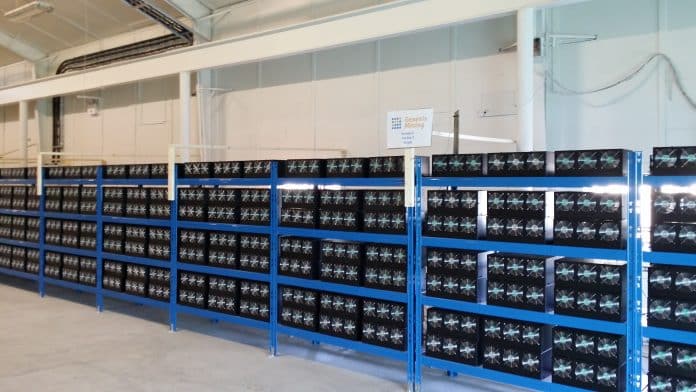
Cryptomining or Cryptocurrency mining is a procedure wherein transactions for different types of cryptocurrency are added and checked to the blockchain digital ledger. It is also known as altcoin mining, crypto-coin mining, Bitcoin mining, for the most well-known type of cryptocurrency Bitcoin. Digital currency mining has expanded both as an activity and topic as digital currency utilization itself has developed rapidly in recent years.

Working of Cryptocurrency Mining

  • Crypto mining began in 2009, with CPUs of the standard PC being utilized to hash. However similar to the case with any new market, things moved especially quickly in the mining part, with the mining business seeing a move far from the standard CPUs to GPU (Graphics processing units), which had the option to hash worked out the cryptographic problems at a quicker rate. The rate of resolving the crypto problems is denoted as the Hashrate.
  • Whenever a cryptocurrency transaction is carried out, a cryptocurrency miner is accountable for the guaranteeing the authenticity of data and updating the blockchain with the exchange. The mining procedure itself includes competing with different crypto miners to take care of problematic mathematical issues with cryptographic hash works that are related with a block containing the transaction information.
  • Moreover, the first cryptocurrency miner to decipher the code is rewarded by having the option to approve the transaction, and as a return for the service the miner gave, cryptominers earn minimal amounts of cryptocurrency for themselves. However, to compete with different cryptominers, a cryptocurrency miner needs a PC with more specialized hardware.
  • Further, the blockchain has a record of each exchange, similar to that each network client or node. When a node is revealed of a new transaction, they need to perform several validation checks to ensure the exchange is genuine. These incorporate checking the unique cryptographic signature joined to the trade, which was created when the procedure is started, to be made sure that it is an authentic signature.
  • Every miner is expected to approve 1MB worth of these exchanges, looking for a chance of verifying new bitcoin. The subsequent step is to effectively take care of a numeric issue, known as ‘proof-of-work.’ Any user who can effectively produce a 64-digit hexadecimal number called as a ‘hash,’ that is either not precisely, or equivalent to the target hash related with the block is rewarded with bitcoin.
  • This is the place where the high computing expenses of mining become an essential factor. The user who has a chance of speculating a hash first, they need to have a high hash rate or hash-per-second. The more powerful the arrangement, the more hashes can be filtered through.

Cloud Mining

Cloud mining, which is also denoted as cloud hashing, enables the client to purchase the output of cryptocurrency mining hardware, which are situated in remote data centers, where the mining is done remotely, clearing the issues encountered by the miners utilizing powerful platforms, including substantial power usage, insulation, heat, and maintenance.

Limitations

  • Even though the miners were once ready to mine their very own cryptocurrencies utilizing a standard PC, this is not practical anymore; the quantity and quality of equipment they have to mine adequately increases by the volume of individuals mining. This in due course has seen a prerequisites jump from a sensibly powerful processor to a top of the line GPU, to a many GPUs working in an association, to latest specialized chips explicitly configured for crypto mining.
  • Anybody with a PC and a net connection can turn into a miner. Moreover, it is significant that mining is not always profitable. Depending upon a few variables, like which cryptocurrency the miner is mining, how fast the PC is, and the expense of power in the area, the miner, may wind up spending more on mining than he earns in cryptocurrency.

Wrap up

Furthermore, as a miner, the most secure approach to mine cryptocurrencies would be by obtaining the essential equipment in the beginning stage to build their cryptocurrency hashing framework. However, they are expenses related, with the setup and ongoing costs, including considerable power costs and the need to update software and hardware, which would likewise require selling when the hardware needs to be upgraded.

Japan will create SWIFT-like network for digital currencies

The Japanese government is trying to develop an international payment network for digital currencies very similar to SWIFT to combat money laundering. Reuters reported the news on Thursday.

As per the anonymous source familiar with the report, said the platform would be overseen by FATF team, inter-governmental body and the government of the island nation is planning to launch the network within next few years. Plan for the new system is approved by FATF in June this year. It was proposed by FSA and the Finance Ministry of Japan.

Japan is trying to confirm the safety of digital currencies to push the economic growth and development of the fintech industry. Japan became the leading nation of the world in 2017 to regulate digital currencies at the national level. They are the first country of the globe to welcome Bitcoin as a lawful tender. When it is about cryptocurrencies Japan has always shown a progressive mentality.

SWIFT is utilized by financial organizations everywhere in the globe to send sensitive financial information and transactions. On the contrary, cryptocurrencies can be directed to anyone around the globe by merely knowing the receiver’s wallet address. It remains indistinct how digital currencies will work in the network like SWIFT. How the decentralized blockchain network gets implemented into the highly monitored system remains a matter of interest.

It remains a matter of speculation how users will react to this kind of monitored network after experiencing the decentralized system of cryptocurrencies. Cryptocurrencies have become widely accepted across various sectors. It is very important to select a reliable and trustworthy platform like  Bitcoin Loophole Trading Platform. To know more about this promising platform traders should go through  Bitcoin Loophole Trading Platform Review, before investing.

Although this lack of regulation is the main reason or worries for the banks and the central government. After the massive hacking attack at cryptocurrency exchange Coincheck, the Japanese government has tightened the security guidelines for the trading platform and has issued a notice to many exchanges for the security breakdown.

The companies willing to offer trading services for the residents of the nation have to acquire a license from FSA. More than 100 companies have applied for a permit to start a trading platform in Japan. So far, the agency has approved a license for three exchanges.

In the G7 meeting of Finance Ministers in France this week digital currencies are most likely to remain a topic.

Trinidad and Tobago MP Complains About Unfair Foreign Exchange Distribution


When it comes to emerging economies, foreign investment, and effective distribution of foreign exchange to different corners of the economy is regarded as one of the most important aspects of policymaking. However, if a Member of Parliament in Trinidad and Tobago is to be believed, then that is not happening in the country. In a new development, the MP in question has now made a complaint against commercial bank about the unfairness of the foreign exchange distribution process. Dr. Surujrattan Rambachan, who is the MP from Tabaquite, has stated that the commercial banks in the country, are unfair with their distribution of foreign exchange.

He went on to state that he became aware of the issue after coming across a notice that had been published by the First Citizens Bank, which is owned by the state. According to the notice issued by the First Citizens Bank, limits have imposed on how much foreign exchange an individual can purchase. If an individual is a customer of FCB, then he can buy at most $300 worth of foreign exchange, while for noncustomers that limit has been revised to only $150 and if the individual in question is a foreign national, then he can only buy $50. Needless to say, this issue caused a stir with many, and soon enough, Dr. Rambachan took up the issue. In this regard, it is also important to add that many individuals on social media had also criticized these new limits.

The MP stated that such limits are an affront to many citizens in the country who are going to go on overseas holidays. However, he went on to add that while the banks have placed such limits on all citizens, there are other sets of influential citizens in Trinidad and Tobago who are able to get as much foreign exchange that they had demanded. He added that such practices could also result in the creation of an unregulated black market for foreign exchange, and that could only be a damaging development for the country at large.

When it comes to emerging economies, foreign investment, and effective distribution of foreign exchange to different corners of the economy is regarded as one of the most important aspects of policymaking. However, if a Member of Parliament in Trinidad and Tobago is to be believed, then that is not happening in the country. In a new development, the MP in question has now made a complaint against commercial bank about the unfairness of the foreign exchange distribution process. Dr. Surujrattan Rambachan, who is the MP from Tabaquite, has stated that the commercial banks in the country, are unfair with their distribution of foreign exchange.

He went on to state that he became aware of the issue after coming across a notice that had been published by the First Citizens Bank, which is owned by the state. According to the notice issued by the First Citizens Bank, limits have imposed on how much foreign exchange an individual can purchase. If an individual is a customer of FCB, then he can buy at most $300 worth of foreign exchange, while for noncustomers that limit has been revised to only $150 and if the individual in question is a foreign national, then he can only buy $50. Needless to say, this issue caused a stir with many, and soon enough, Dr. Rambachan took up the issue. In this regard, it is also important to add that many individuals on social media had also criticized these new limits.

The MP stated that such limits are an affront to many citizens in the country who are going to go on overseas holidays. However, he went on to add that while the banks have placed such limits on all citizens, there are other sets of influential citizens in Trinidad and Tobago who are able to get as much foreign exchange that they had demanded. He added that such practices could also result in the creation of an unregulated black market for foreign exchange, and that could only be a damaging development for the country at large.

Binance plans to extend its services to South Korea; To Launch New Exchange

Binance, Malta-based largest cryptocurrency exchange of the world by trading volume plans to offer its services in South Korea by launching a new exchange.

The development news was recently revealed by the top crypto exchange firm, Binance.

CEO of Binance, Changpeng Zhao unveiled its exchange plan to extend its services into a new market and to simplify the process it is currently collaborating with local associates, local news outlet, Block In-Press mentioned about the news on Tuesday.

Binance CEO Zhao stated,

We do not know the details related to the establishment of the Korean branch. We are working with local partners, but we do not know the details.”

Later Binance spokesperson informed that Binance exchange is thinking of working with a blockchain FinTech company, BxB and is discussing with the firm, it has not taken any particular decision on it. We have not considered whether to establish a branch in South Korea or not.

Zhao told that the exchange firm is doesn’t know about the establishment details of its new headquarter in South Korea.

Binance Exchange is working on its plan

One of the crypto sources reported that the top cryptocurrency exchange of the world has set up Binance LLC, the local entity in South Korea.  Binance crypto exchange has recruited Jiho Kang of BXB, as the director of the new Binance office. BXB is a fintech company that provides Korean won-backed stablecoin.

Spokesperson of Binance spoke to Block In Press and said that the exchange is speaking with BXB fintech firm, but the proper decision has not been taken.

Earlier Zhao indicated significant expansion of its services in South Korea, during the Blockchain Partners Summit held at Seoul in July last year. During the summit, Zhao emphasized on the significance of the South Korean market. He also mentioned that the exchange will invest in helping its cryptocurrency exchange to scale.

Binance seeking to hire a compliance officer

On the other side, the cryptocurrency exchange is seeking a compliance officer in South Korea. This indicates the firm’s possibility of launching a new office in South Korea.

The new job post was mentioned on Binance’s website, that reads as follows,

“We are seeking a Compliance Officer to support our expansion into all global frontiers, including KYC, Client Onboarding, and AML/CFT. The role is based in Seoul, South Korea.”

The candidate applying for the post should meet the qualification criteria and should have additional qualities; the exchange stated the additional qualities,

 “Good knowledge on provisions of local laws, directives, regulations, and otherwise standards applicable to subject persons and knowledge of upcoming regulation of virtual currency policies is a strong plus.”

Binance’s other developments

Binance is expanding its services to other parts of the country. In June, Binance successfully launched its crypto exchange platform in Singapore. It further continued with its development plan by launching similar kind of fiat-based services in Uganda and Jersey.

Earlier, the news was circulating that Binance is planning to open a crypto-based trading platform in the peninsular nation; however, the report was declined by the exchange spokesperson.

Addition to this development, Binance is working to include new services to its crypto trading platform.  Binance is also considering joining the crypto futures market with a fresh platform.

Nigeria’s I&E Forex Window Brings in $18.7 Billion in Just Seven Months So Far

For almost all developing nations, foreign investment is regarded as the best ticket to economic growth, and for investors, placing bets on emerging economies is universally regarded as the best way to generate hefty returns. As far as economic prospects in Africa are concerned, then no other nation quite comes close to Nigeria, because of the country’s oil reserves and mineral deposits. It can prove to be one of the most attractive investments for investors from all over the globe. Although millions of dollars have flooded into the country’s economy over the years, Nigeria made another concerted effort to attract even more foreign investment by establishing the Investors and Exporters (I&E) Foreign Exchange window.

While many thought that it was going to end up being a success, no one really thought that it would end up attracting as much as $18.7 billion in just seven months since it was first launched. It not only shows that the initiative is an unqualified success but also demonstrates the fact that Nigeria remains one of the most attractive investment opportunities for global investors. Although it is true that no official figures have been revealed, the figure was published by a study that had been conducted by research analysts at the Coronation Merchant Bank.

The function of the I&E Forex window has proven to be a huge benefit for foreign investors and exporters. Godwin Emefiele, who is the head of the Coronation Merchant Bank, stated that the goal of the exchange was to allow exporters and investors to buy and sell foreign exchange at the current rates. The report states that as much as 65.40% of the inflows into the exchange have come in from overseas sources. However, Emefiele stated that he is hopeful that the exchange will also attract substantial inflows from domestic investors in the near future. He said, “In this regard, the Federal Government budgets were readjusted to adequately address priority infrastructure needs that would support improved investments by the private sector. This was complemented by various Presidential initiatives on improving the ease of doing business in Nigeria, dismantling regulatory bottlenecks, enhancing competitiveness and industrialization.”